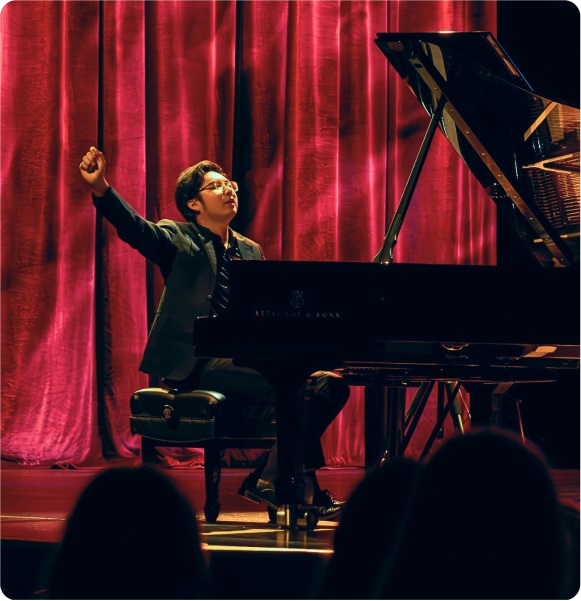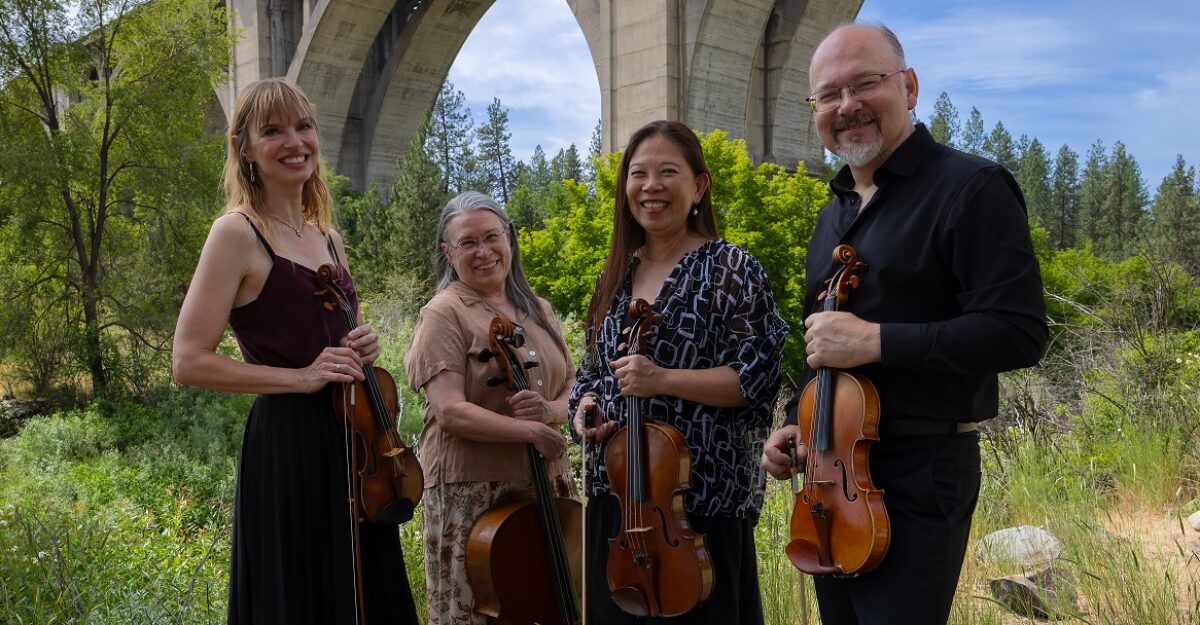
The Spokane String Quartet continues its 2026–27 season with a concert at 2 p.m. Sunday, Nov. 1, at The Fox Theater in Spokane.
Tickets are available online at The Fox website or at the door.
The program features the Spokane String Quartet performing works by Joseph Haydn, Frank Bridge and Peter Ilyich Tchaikovsky.
The program includes:
- Joseph Haydn: String Quartet in G Major, Op. 76, No. 1
- Frank Bridge: Phantasie for String Quartet, H. 55
- Peter Ilyich Tchaikovsky: String Quartet No. 1 in D Major, Op. 11
About the program
Joseph Haydn (1732-1809) was 63 when he returned to Vienna following triumphant residencies in London, where he gained international fame composing and premiering his music, including the 12 “London Symphonies”. Rather than rest on his London laurels, Haydn then began composing Opus 76, his final complete set of 6 string quartets. Many consider Opus 76 (which contains the Quartet in G Major, No. 1) to be his most ambitious, powerful, and skillful exploration of writing for string quartet. Haydn’s mastery of the conversation between 4 equal quartet musicians laid the foundation for an everchanging multicolored exploration of musical motifs and textures. Haydn’s legacy includes transforming string quartet music from light entertainment for the court into one of music’s essential genres, comfortably taking a place between the instrumental sonata and symphony.
Frank Bridge (1879-1941) was an English composer, conductor, violist, and Benjamin Britten’s teacher and lifelong mentor. Bridge’s Phantasie for String Quartet was his prize-winning entry into the prestigious Cobbett Competition of 1905. Wealthy industrialist and amateur violinist Walter Cobbett sponsored 6 competitions encouraging younger British composers to compose short single movement Phantasies, a style borrowed from the 17th-century fantasies for viols. Bridge’s prize-winning entries into 3 of the Cobbett Competitions played a breakthrough role in Bridge being recognized as one of the leading chamber music composers of his generation.
Peter Ilyich Tchaikovsky’s (1840-1893) three string quartets were written during the early stages of his composing career while he was teaching harmony for 12 years at the newly founded Moscow Conservatory. Tchaikovsky, virtually unknown and barely surviving on his teaching salary, was encouraged to arrange a benefit concert to supplement income and bring his music to greater public awareness. Since he couldn’t afford the cost of engaging a larger orchestra, he focused on composing String Quartet No. 1. The resulting masterpiece was a popular success, especially the second movement Andante cantabile, which contains a beloved Ukrainian folk melody that Tchaikovsky supposedly learned from a carpenter singing the tune at his sister’s estate. Tchaikovsky noted in his diary with pride that he was sitting next to Leo Tolstoy, when the distinguished author of War and Peace burst into tears upon hearing the Andante cantabile.